
The Warsaw That Refused to Disappear
Medieval streets, royal secrets, forgotten punishments and the reconstruction of a city almost wiped from the map.
Explore the guide ↓Colourful houses, winding lanes, a royal castle and a sword-bearing mermaid: Warsaw’s historic heart can look almost untouched by time. Yet much of it rose from the devastation of 1944. The rebuilding itself is now part of the city’s history.
Walk through Old Town and New Town and you’ll find original medieval cellars under reconstructed homes, walls whose mortar marks different centuries, and the remains of a royal monument lying just off a square. The stories only deepen when you look closely.
Old Town & New Town illustrated map
This illustrated map, prepared for Brit in Poland, includes the main historic sites and neighbouring discoveries. The expanded version is easier to inspect on a phone or desktop.
A medieval city above the Vistula
Warsaw grew on the Vistula escarpment during the late thirteenth century, where a defensible position above the river met opportunities for trade. A compact Mazovian town developed around its market and churches, bounded by walls and divided into narrow properties. Beyond the northern defences another settlement expanded: New Town, which received town rights in 1408. Despite the name, it is more than six centuries old.
Old and New Town were historically distinct urban communities. Today you can walk between them in minutes, but their different streets and squares still reveal that earlier history.
Castle Square, the Royal Castle & Sigismund’s Column
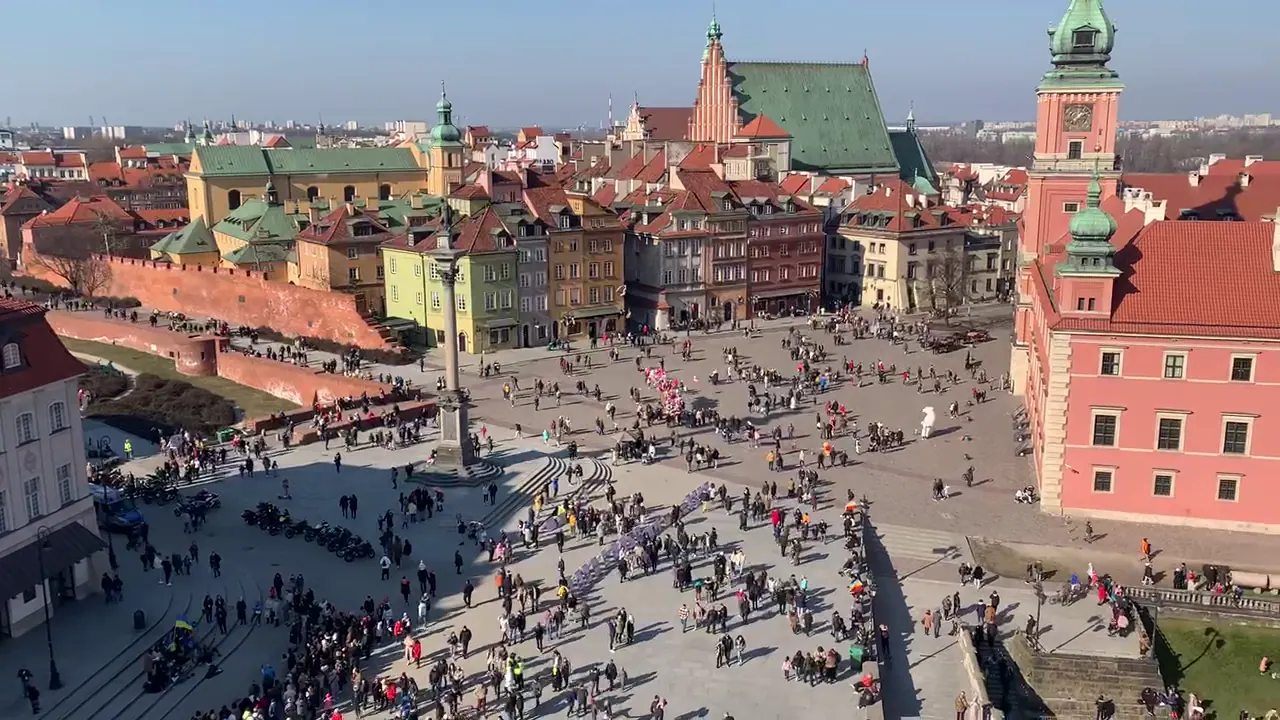
Castle Square is the grand entrance to historical Warsaw. The Royal Castle developed from a residence of the Dukes of Mazovia into a major seat of government in the Polish-Lithuanian Commonwealth. Under Sigismund III Vasa, Warsaw became increasingly central to royal life and parliamentary business. On 3 May 1791, the Commonwealth adopted its celebrated constitution in the Royal Castle.
German occupiers systematically destroyed the castle during the war; Polish museum and conservation workers had earlier salvaged artworks and architectural fragments at great personal risk. Its main reconstruction was carried out from 1971 to 1984 — decades after much of Old Town had returned.
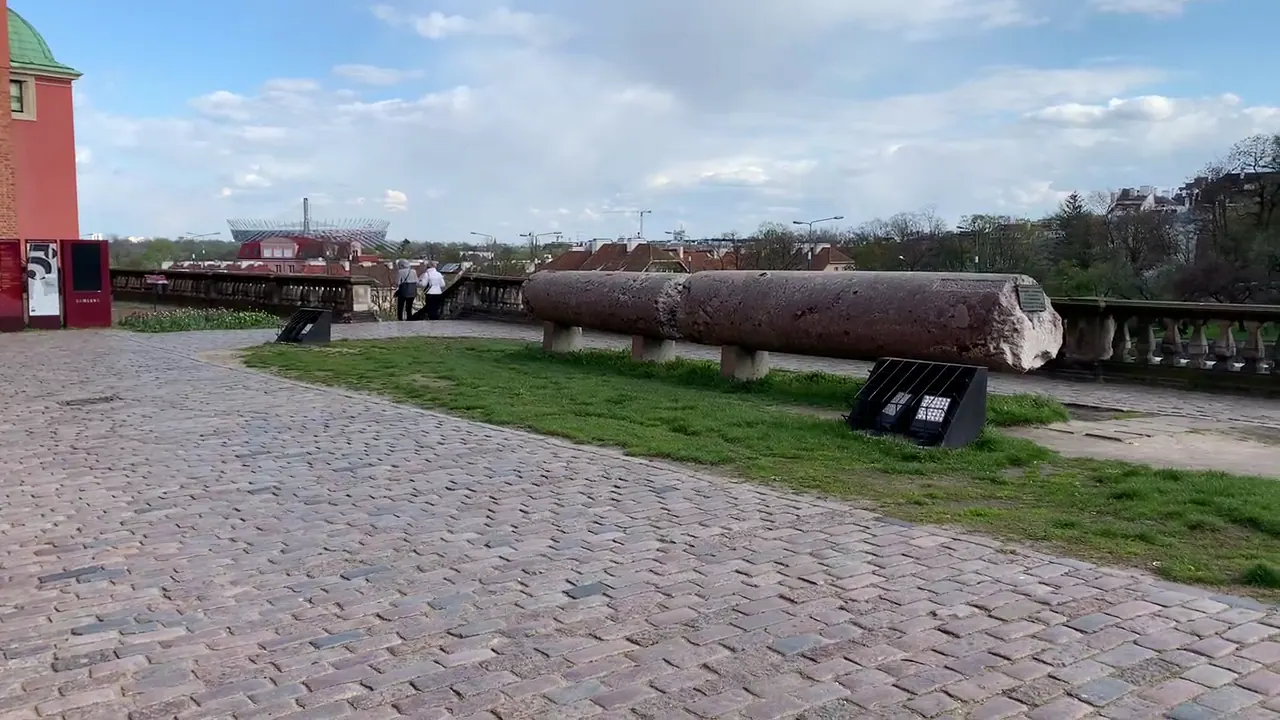
The column was first raised in 1644 in honour of Sigismund III. The original stone shaft was replaced in 1887. A German attack brought it down during the night of 1–2 September 1944, damaging the bronze statue, which was repaired. The monument returned in 1949 with a new granite shaft.
Old Town Market Square: beauty, business & punishment
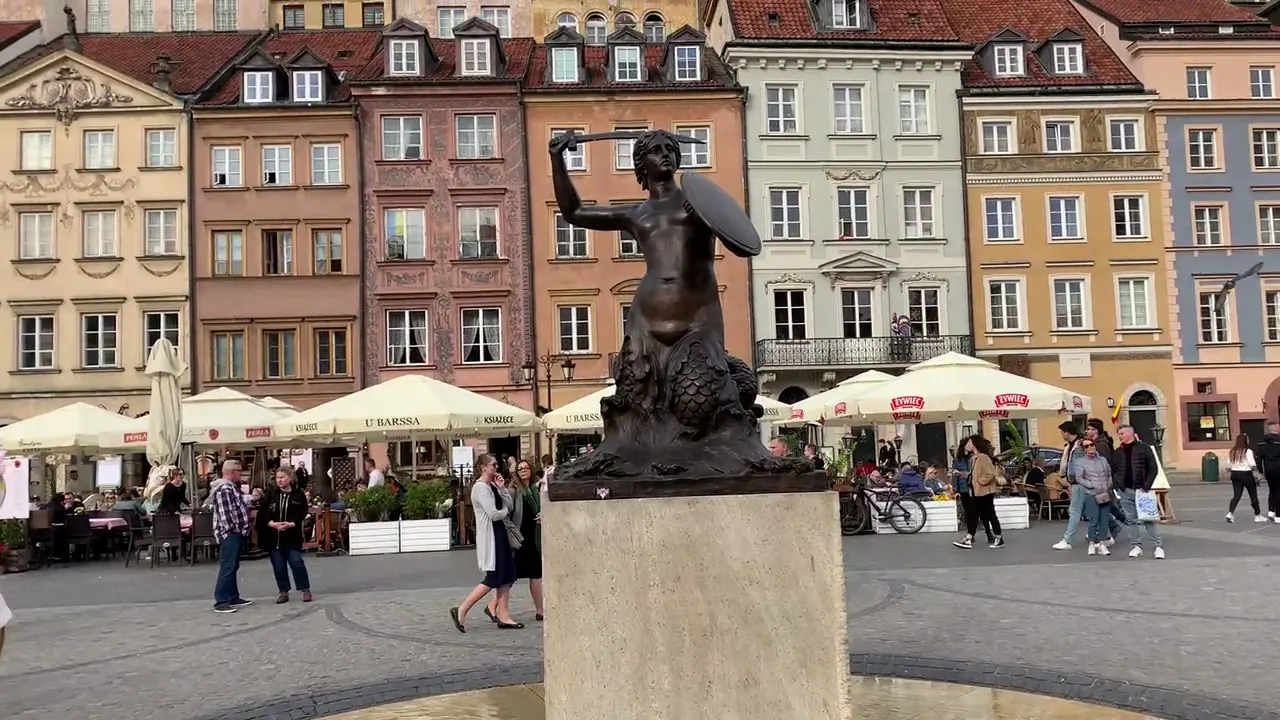
The Market Square (Rynek Starego Miasta) looks effortlessly historical, with richly coloured façades, restaurants and the city’s famous Mermaid. In medieval and early modern Warsaw this was the centre of trade, municipal government and public justice. A town hall once stood in the middle of the square, surrounded by commercial activity; it was demolished in 1817.
The square also had a pillory and an iron punishment cage, and sometimes witnessed public executions. Such punishments were intended to be seen. Piekiełko near Piekarska Street was another traditional execution site, while one especially notorious case would be associated with New Town Market Square.
In 1339, proceedings in the dispute between the Polish crown and the Teutonic Order began at the hereditary reeve’s house, at what is now Market Square 19, before moving to St John’s Church. It’s an unexpected connection between Warsaw’s square and the medieval conflicts explored in our Malbork material.
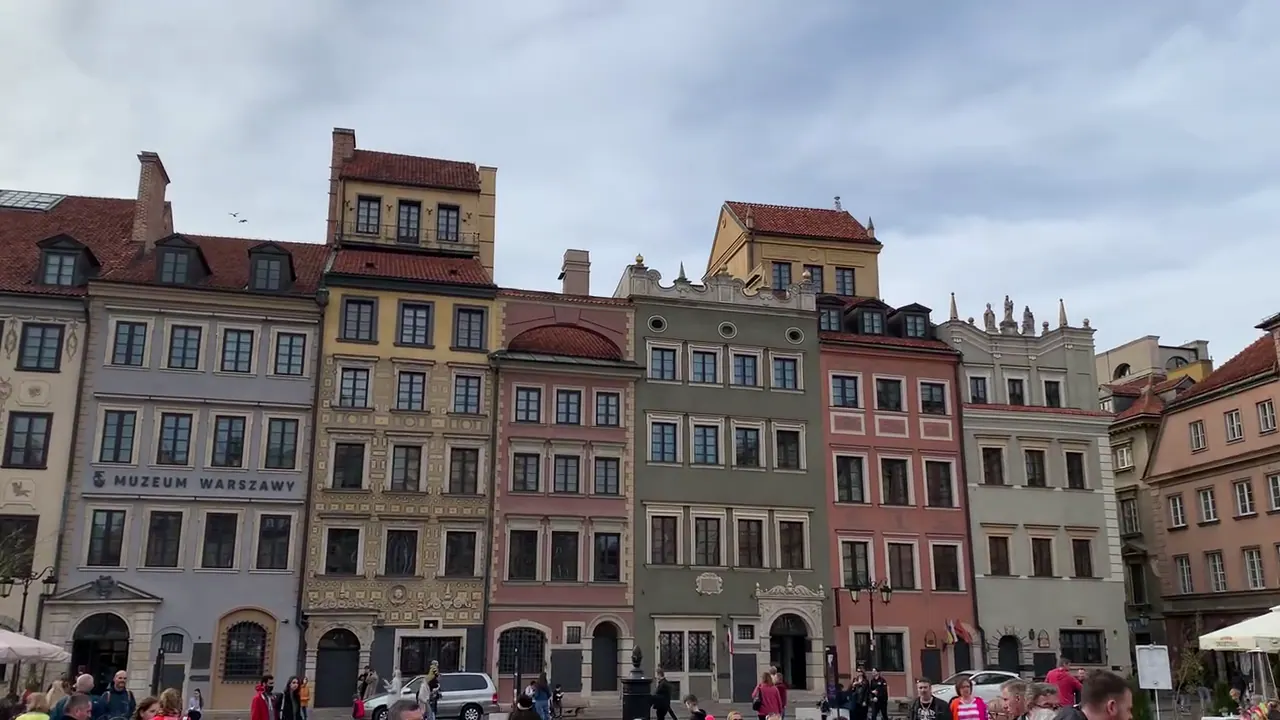
The Mermaid: a moving original and a living legend
The sword-bearing Mermaid is one of Warsaw’s best-known emblems. The present Market Square figure is a replica; Konstanty Hegel’s nineteenth-century original is preserved by the Museum of Warsaw. The original left the square in 1928, spent time elsewhere in the city, survived wartime damage and returned in 1999, before being replaced by a copy in 2008.
In folklore a mermaid journeys up the Vistula, is captured by a greedy merchant and rescued by local fishermen. In gratitude she vows to protect the settlement. The tale explains the symbol imaginatively, though not the documented origins of the city.
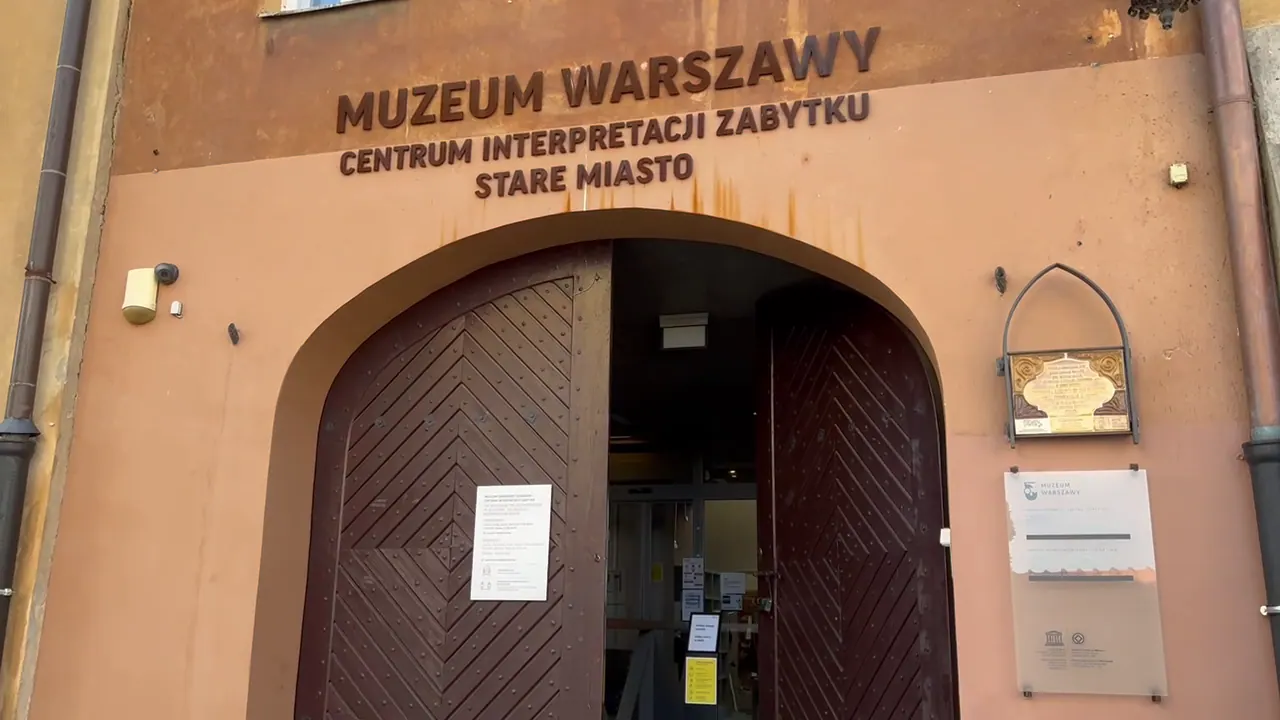
Art, illusions and unexpected museum stops
Archdiocese Museum: more than religious art
Just beside St John’s Archcathedral, the Museum of the Archdiocese of Warsaw (Muzeum Archidiecezji Warszawskiej) occupies the Dean’s Palace at Dziekania 1. Alongside sacred art, it displays secular painting and sculpture, including works by prominent Polish artists. It's an appealing stop even if religious history isn't normally your first choice.
One particularly compelling reason to visit is its display of Zdzisław Beksiński: 27 unsettling, dreamlike paintings from the museum’s holdings and the collection of Anna and Piotr Dmochowski. Skeletal forms, impossible landscapes and eerie atmospheres make his work instantly distinctive. The museum announced an indefinite extension of this display, although it is sensible to check what is on view before visiting. The adapted museum also gives visitors access to reconstructed passages linked with the historic royal route towards the cathedral.
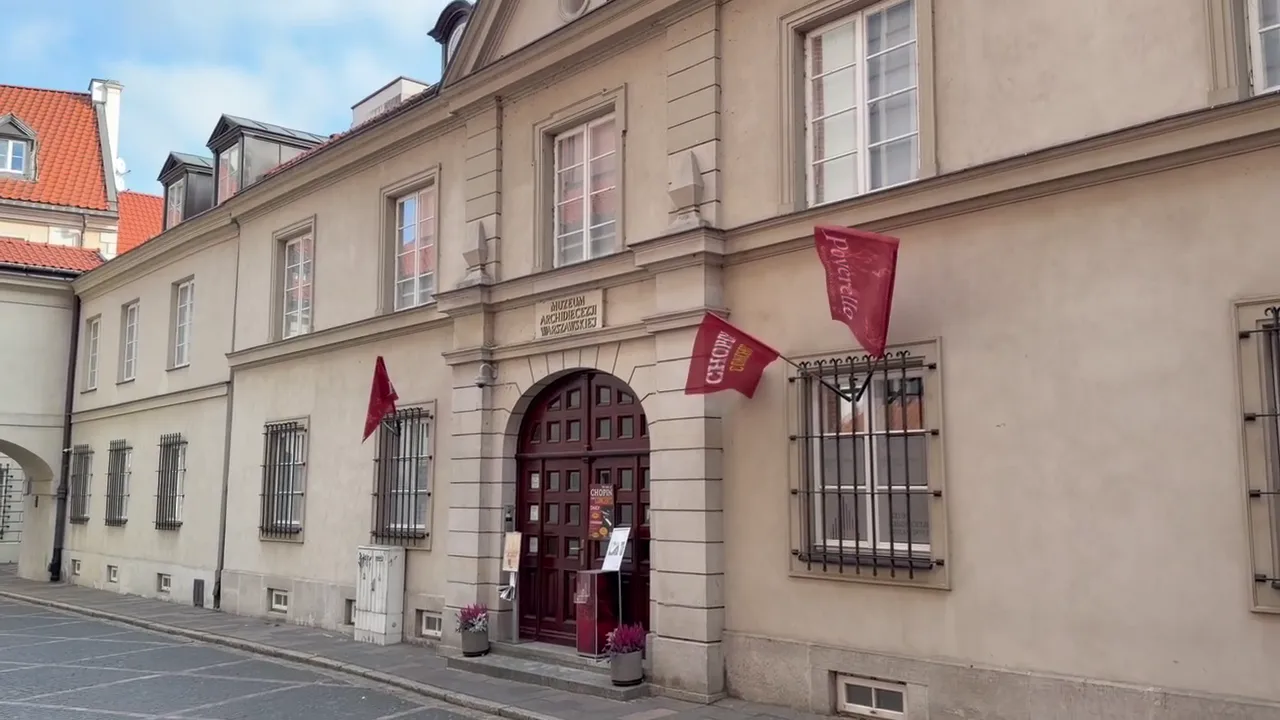
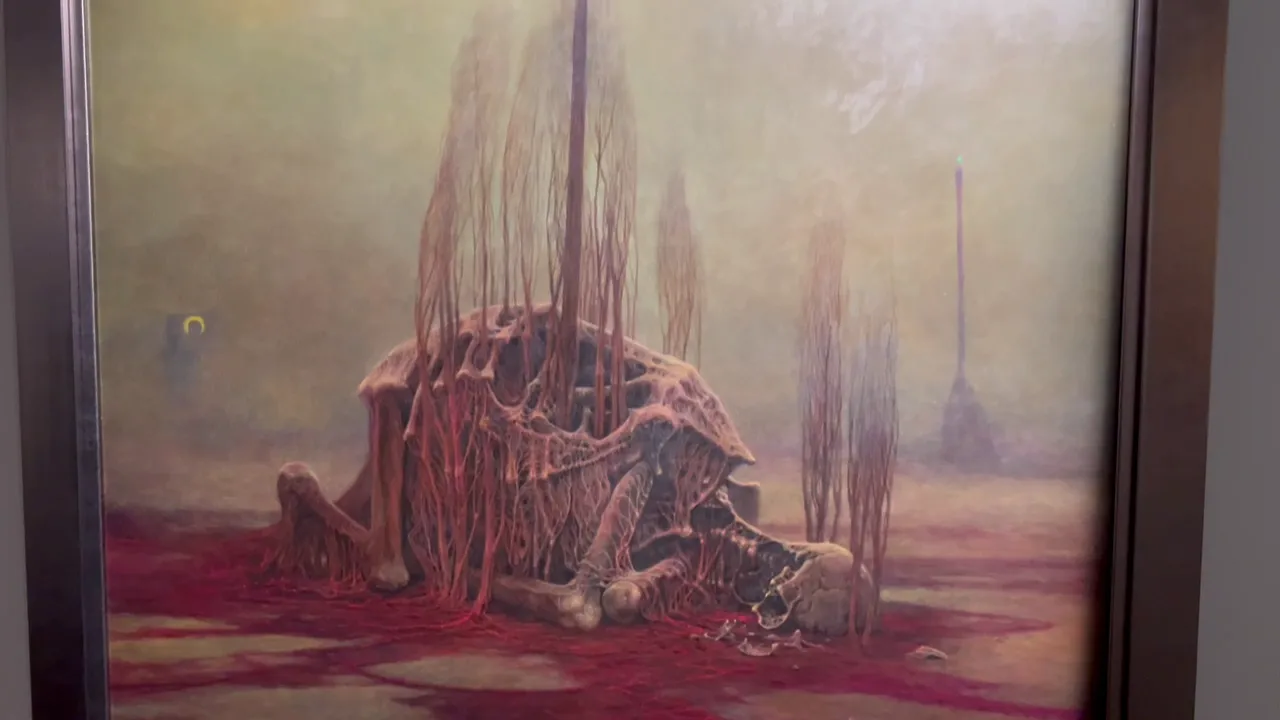
Check exhibitions and opening hours on the museum's official site ↗
Museum World of Illusion: a playful stop for families
For a completely different experience, the Museum World of Illusion (Muzeum Świat Iluzji) is right on Old Town Market Square at number 21, on the first floor. Its hands-on optical illusions, perspective tricks and installations are designed for participation and photographs. It's a great alternative for children, families or anyone who fancies something lighter between historic churches and wartime stories.
Admission is ticketed; check the official museum website for current hours and tickets ↗.
Destruction, bricks and the decision to rebuild
Old Town became a major battleground in the 1944 Warsaw Uprising. Bombardment and street fighting devastated the district; after the uprising, German forces continued the planned destruction of Warsaw. UNESCO reports that more than 85% of the historic centre was destroyed.
The rebuilding was a national undertaking involving conservators, architects, craftsmen, labourers, artists and students. The Warsaw Reconstruction Office planned the work; Jan Zachwatowicz and other specialists argued that recovering the historical townscape was essential to Poland’s cultural identity. It was also a state-directed undertaking financed in part through the Społeczny Fundusz Odbudowy Stolicy, which collected contributions nationwide.
Bricks and stone were recovered from ruined buildings and salvage campaigns elsewhere in Poland, including in formerly German territories. Materials came from damaged cities and demolished buildings, including some former aristocratic estates. This answered an acute shortage but also cost other places parts of their own architectural heritage. Not every brick here came from elsewhere, and national salvage totals should not be confused with deliveries to Warsaw.
The 1945 Bierut Decree transferred ownership of Warsaw land to the municipality, facilitating broad replanning while also giving rise to lasting property controversies; it did not automatically transfer every building to the state.
The reconstruction was not a literal reproduction of 1939. Architects consulted measurements, archives, surviving material and painted cityscapes by Bernardo Bellotto — known in Poland as Canaletto. They also selectively recreated earlier façades, adapted courtyards and introduced modern homes behind historic-looking fronts. Artists added new sgraffito and other decoration.
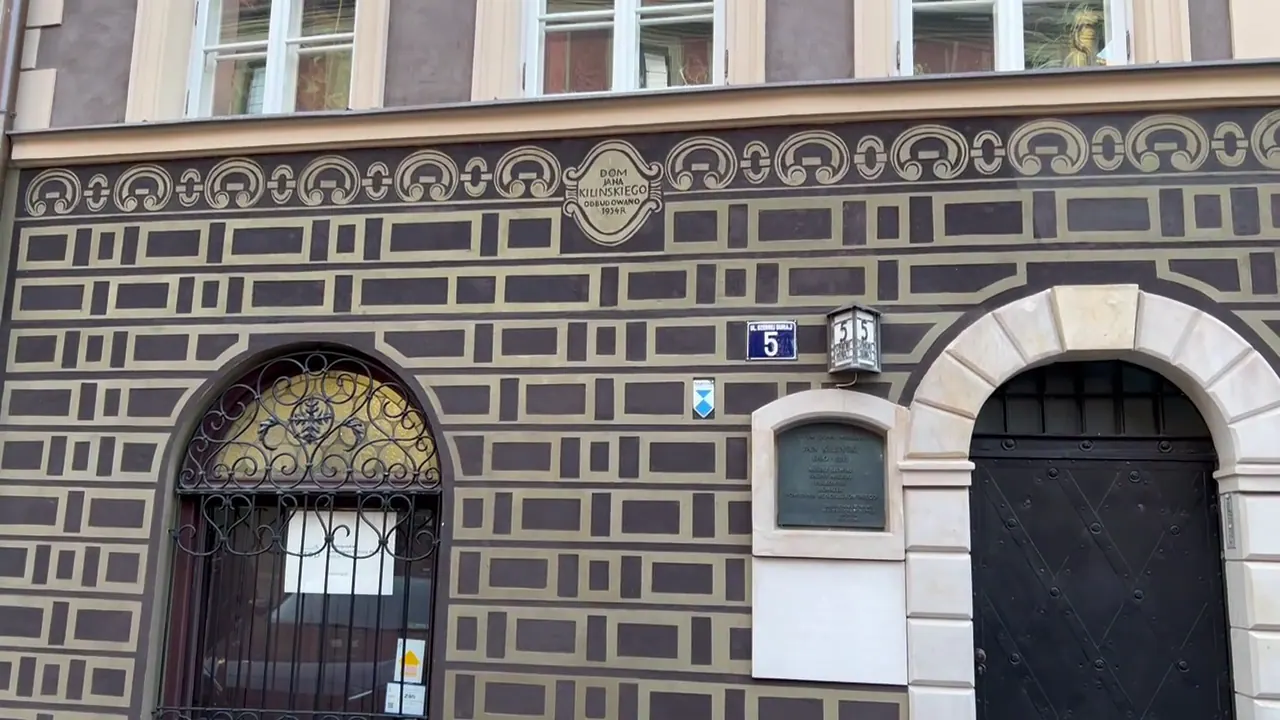
The reconstructed core was unveiled in stages during the early 1950s, while the Royal Castle took decades longer. The historic centre joined the UNESCO World Heritage List in 1980: the rebuilding itself was recognised as a pioneering conservation achievement. The Warsaw Reconstruction Office archives entered UNESCO’s Memory of the World Register in 2011.
Kanonia, the cathedral & the old streets
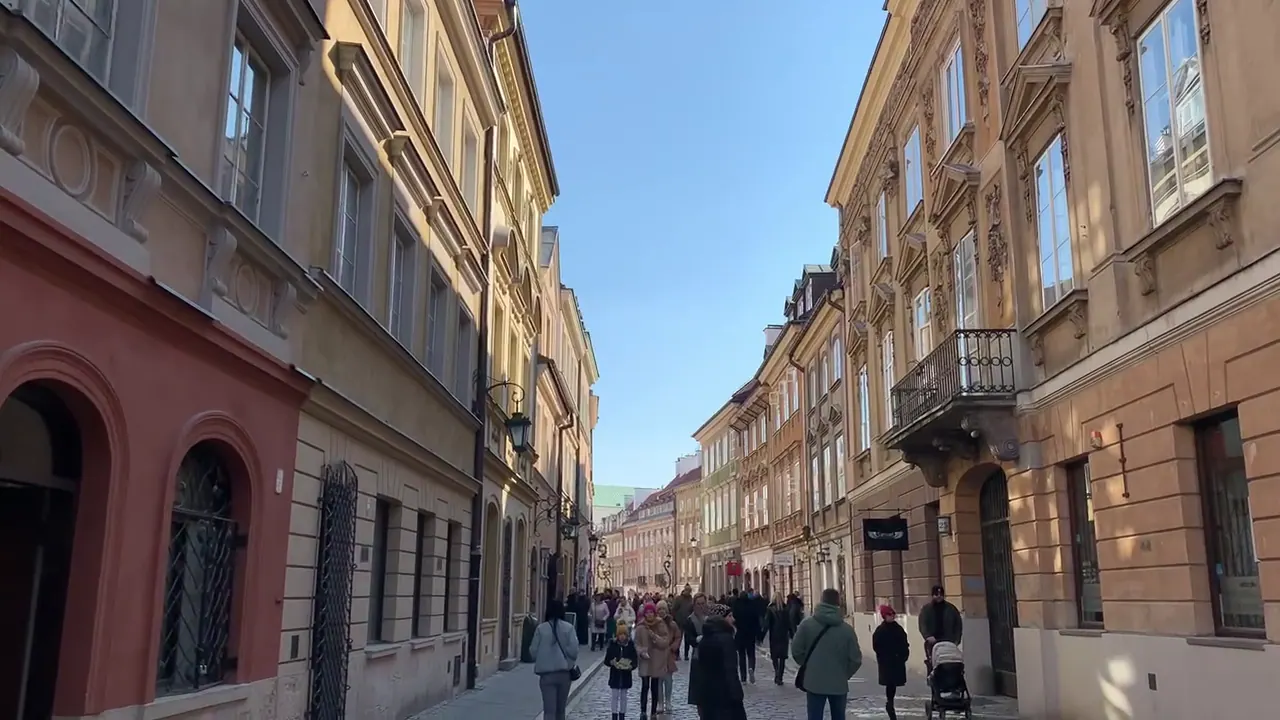
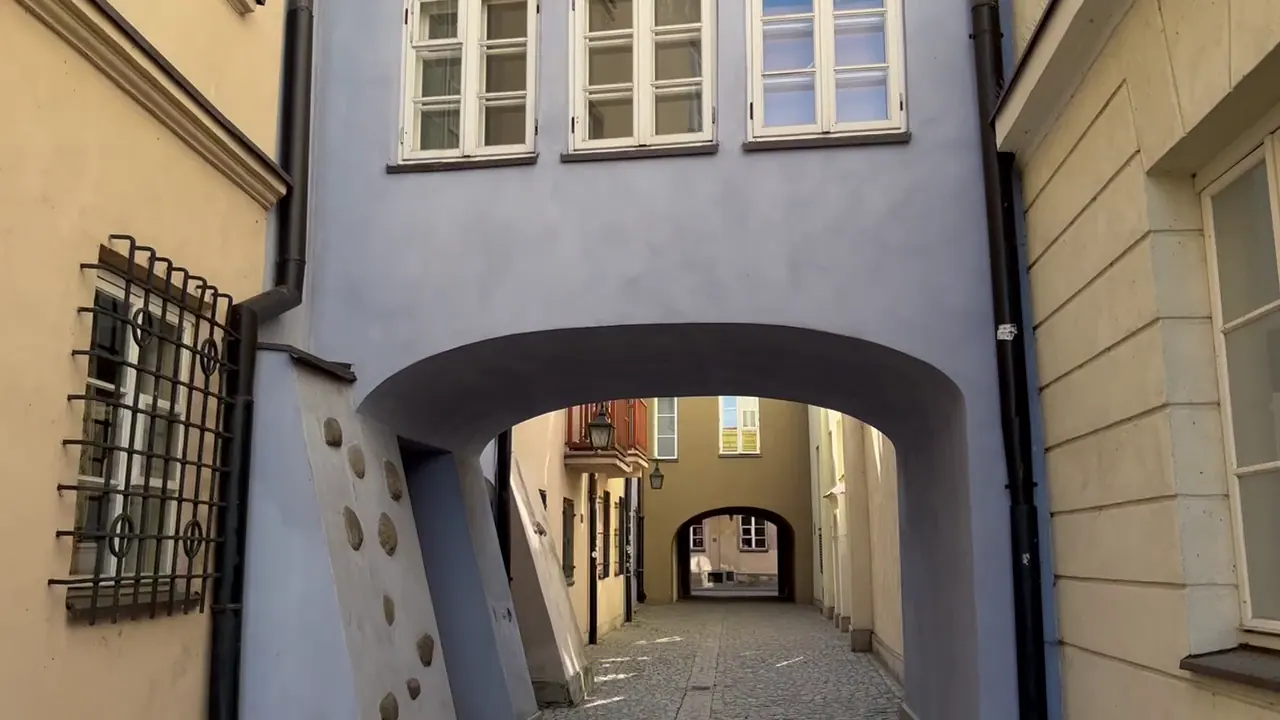
A few streets from the square, the pace changes. Passageways, arches, steep steps and small courtyards show a more intimate historic centre. St John’s Archcathedral has witnessed royal and national ceremonies and contains memorials linked to centuries of Polish history. For its religious heritage, continue to our Sacred Warsaw guide.
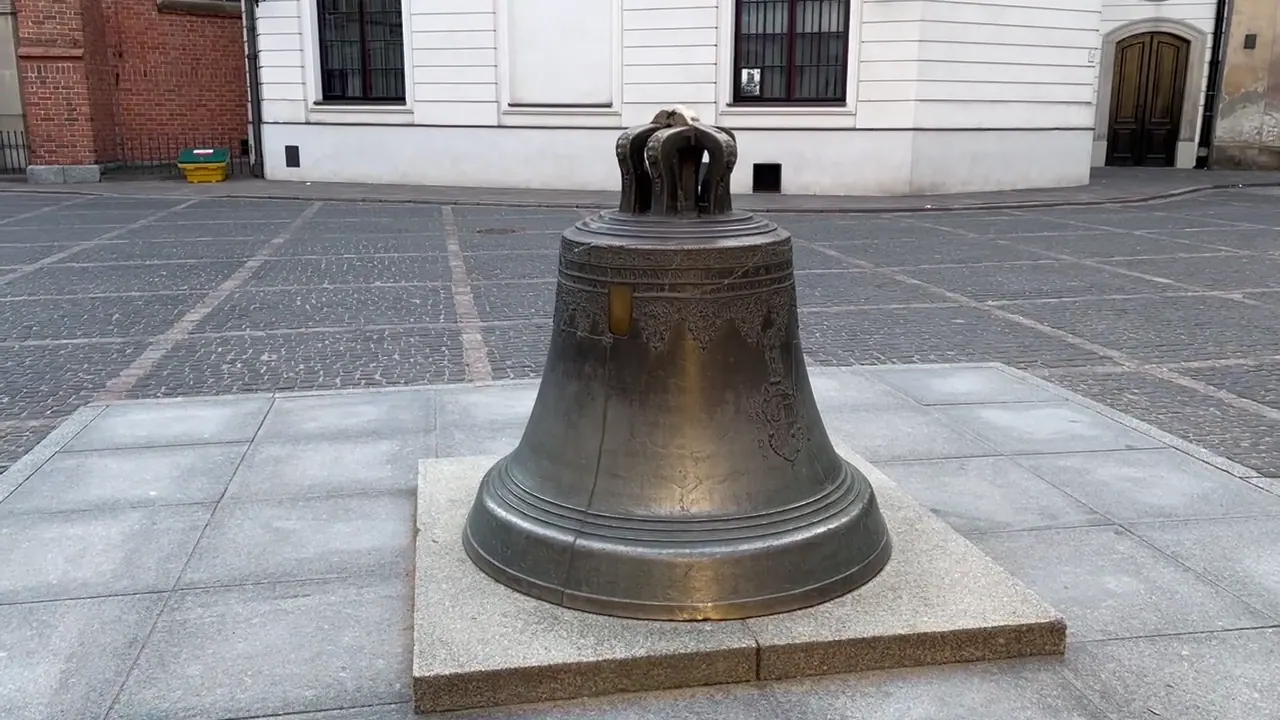
Behind the cathedral is Kanonia, where a bronze bell cast in 1646 by Daniel Tym has stood since 1972. Local custom invites visitors to touch it and make a wish; versions of the ritual differ, so treat the promised magic as folklore. A tiny-looking house in the same square gives another optical surprise: its narrow frontage conceals more building behind.
Gnojna Góra, once associated with the disposal of the town’s waste, now offers a view across the Vistula. If you want to understand why early Warsaw occupied this elevated site, this is a particularly good place to stop.
The Barbican, city walls & Little Insurgent
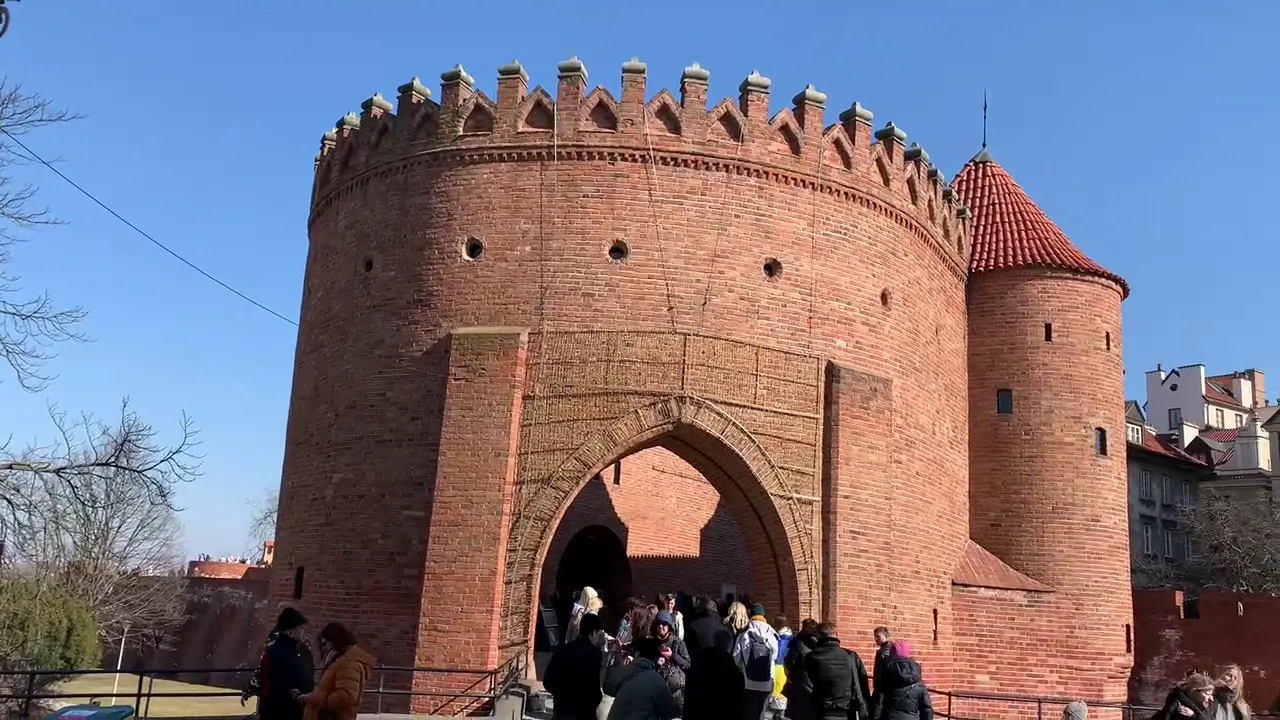
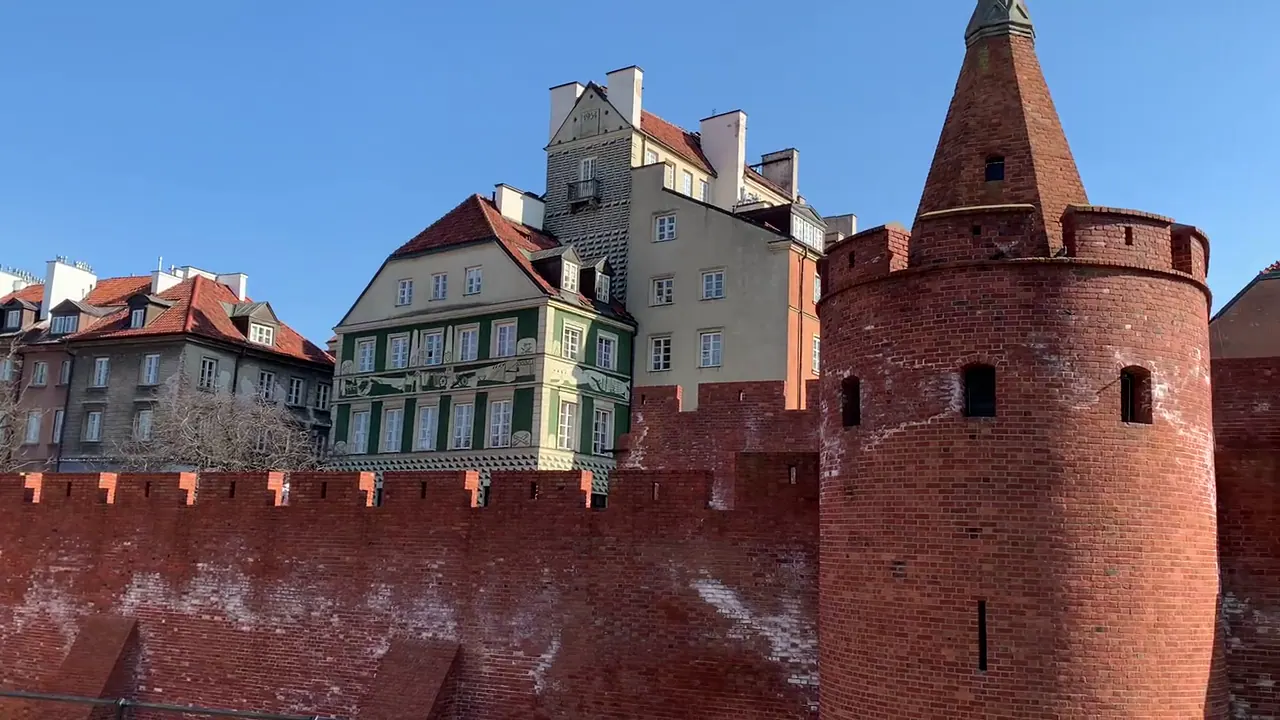
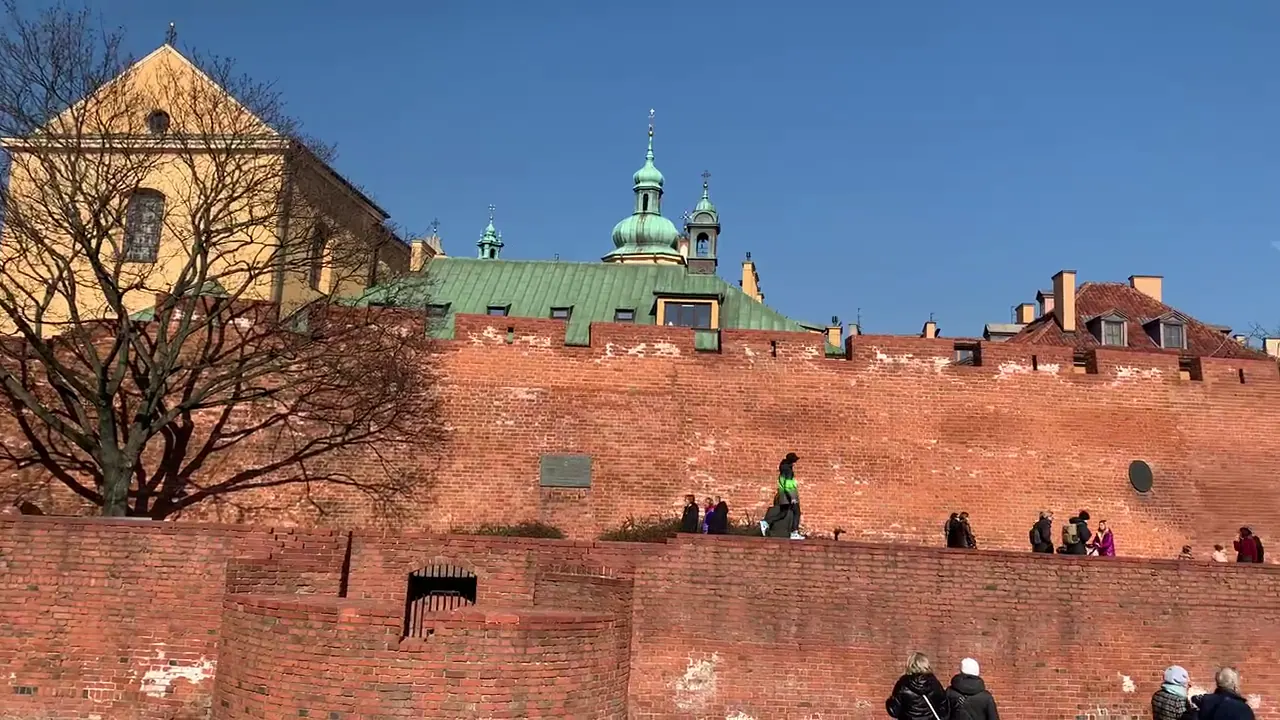
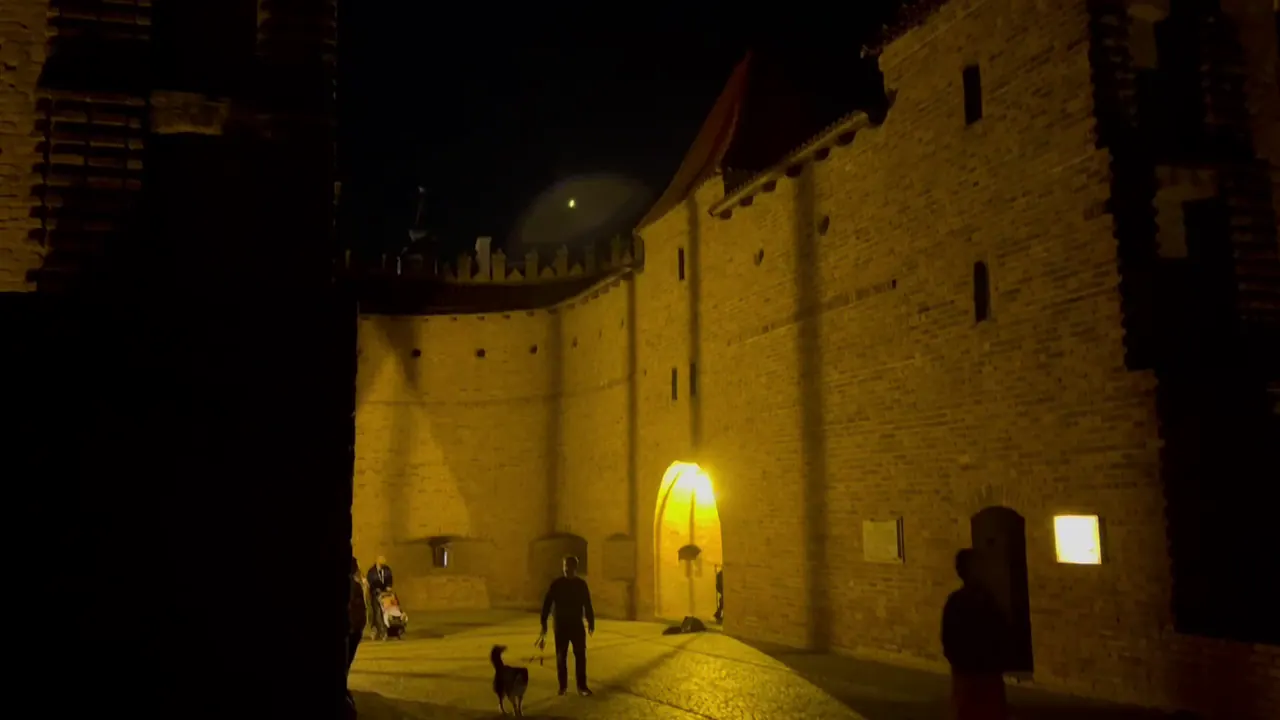
The Barbican guarded the northern approach to Old Warsaw. Built around 1548–1550 and associated with Jan Baptysta Wenecjanin, it was conceived as artillery was already making traditional walls less effective. Later centuries saw these defences adapted, obscured by buildings and partially dismantled. Early conservation work preceded the war, but today’s striking structure is largely a 1952–1954 reconstruction incorporating surviving historic remains.
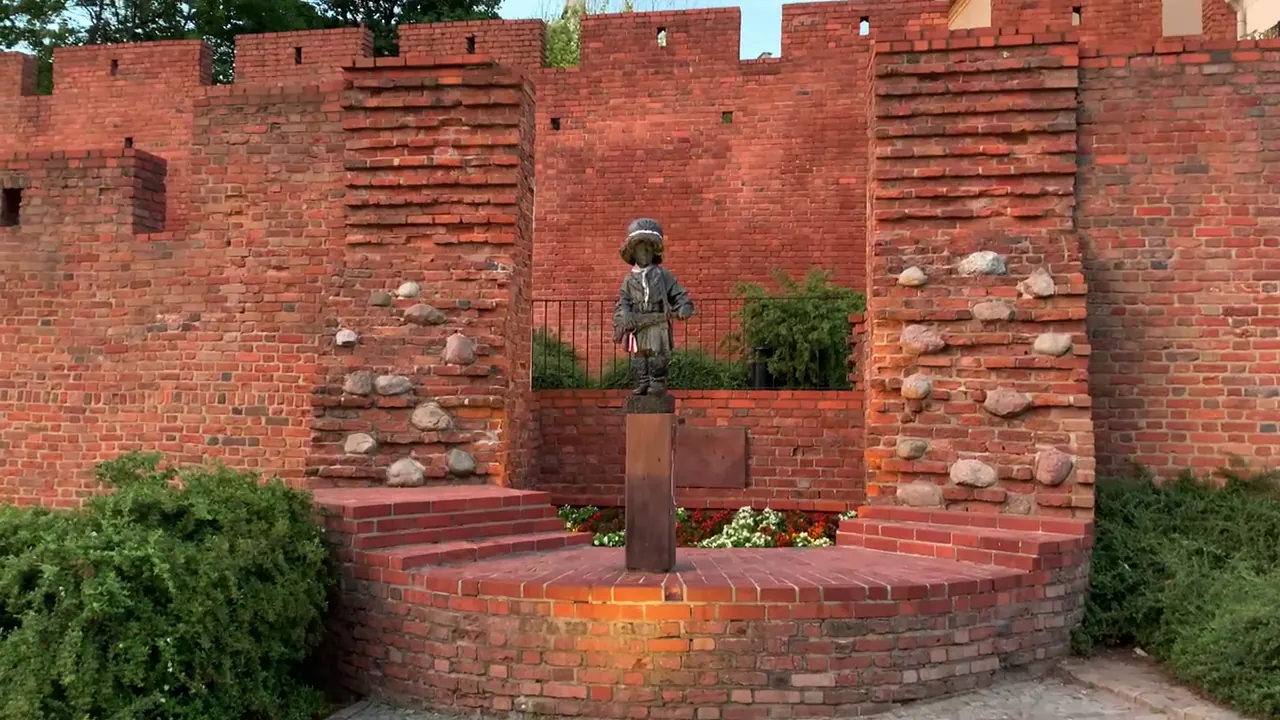
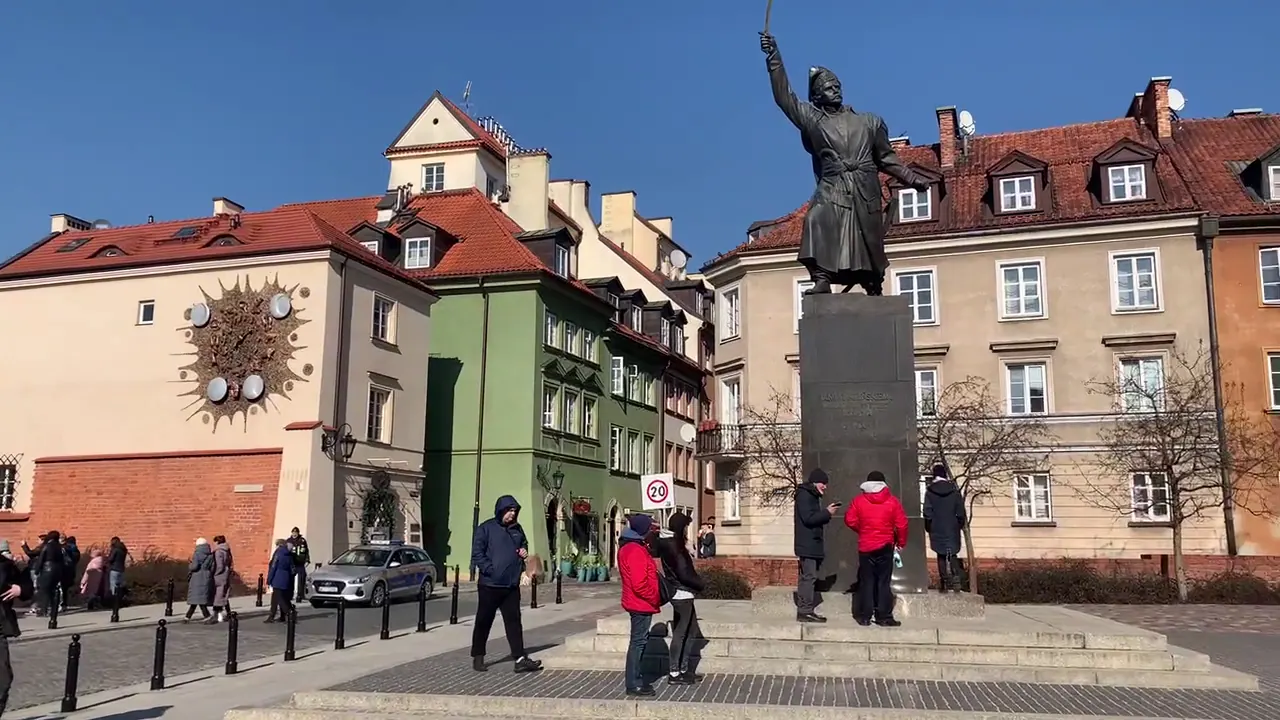
On nearby Podwale stands the Little Insurgent monument, commemorating the children affected by the Warsaw Uprising. Its small scale is part of its force. Nearby, Jan Kiliński — a shoemaker who helped lead the Warsaw Insurrection in 1794 — stands as another reminder that citizens, not just royalty, shaped the city.
During the occupation, the Germans removed the Kiliński statue in retaliation after a Polish scout removed the German-language plaque placed on the Copernicus monument. The statue was stored at the National Museum, where a message signed in Kiliński’s name appeared on the wall. Its monument originally stood in Krasiński Square before being moved to Podwale.
Basilisks, amber windows & vampire kits
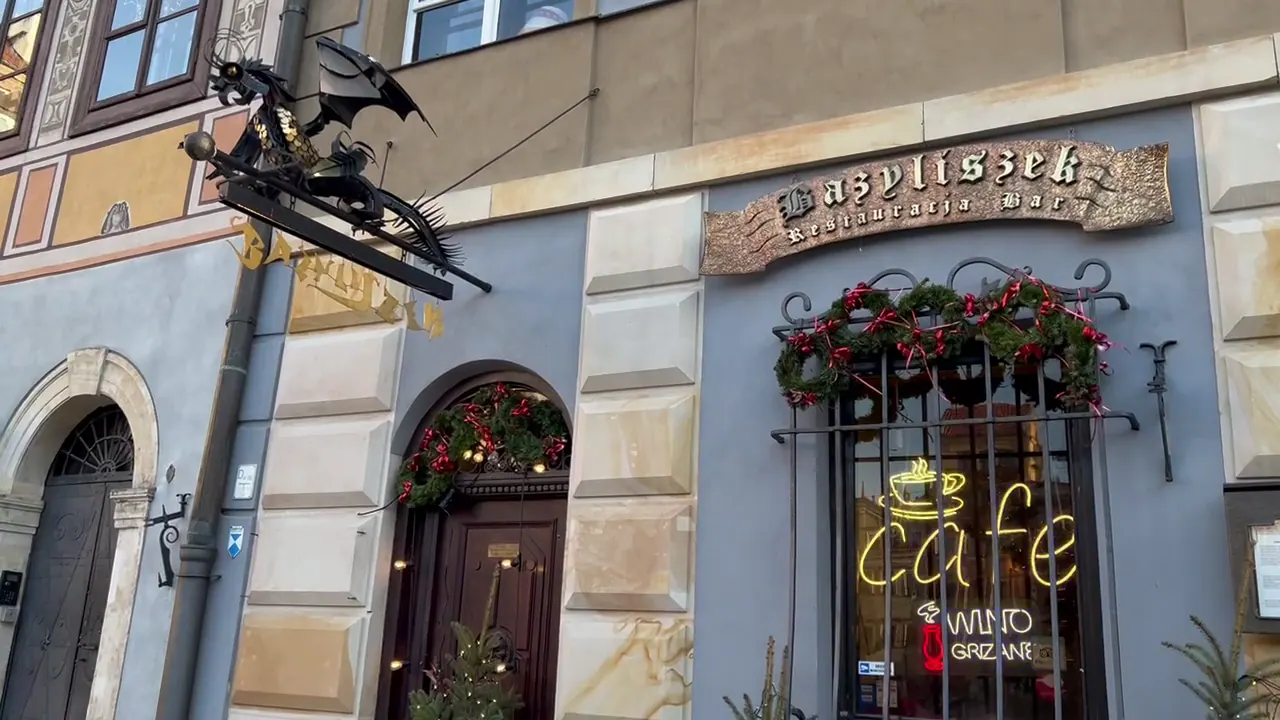
Old Town has its fair share of mythical creatures. The house known as Pod Bazyliszkiem evokes the Basilisk — a monster whose gaze killed its victims. One version of the story has a clever challenger defeat it by forcing the creature to see its reflection. Follow the fuller tale in our Polish culture and folklore section.
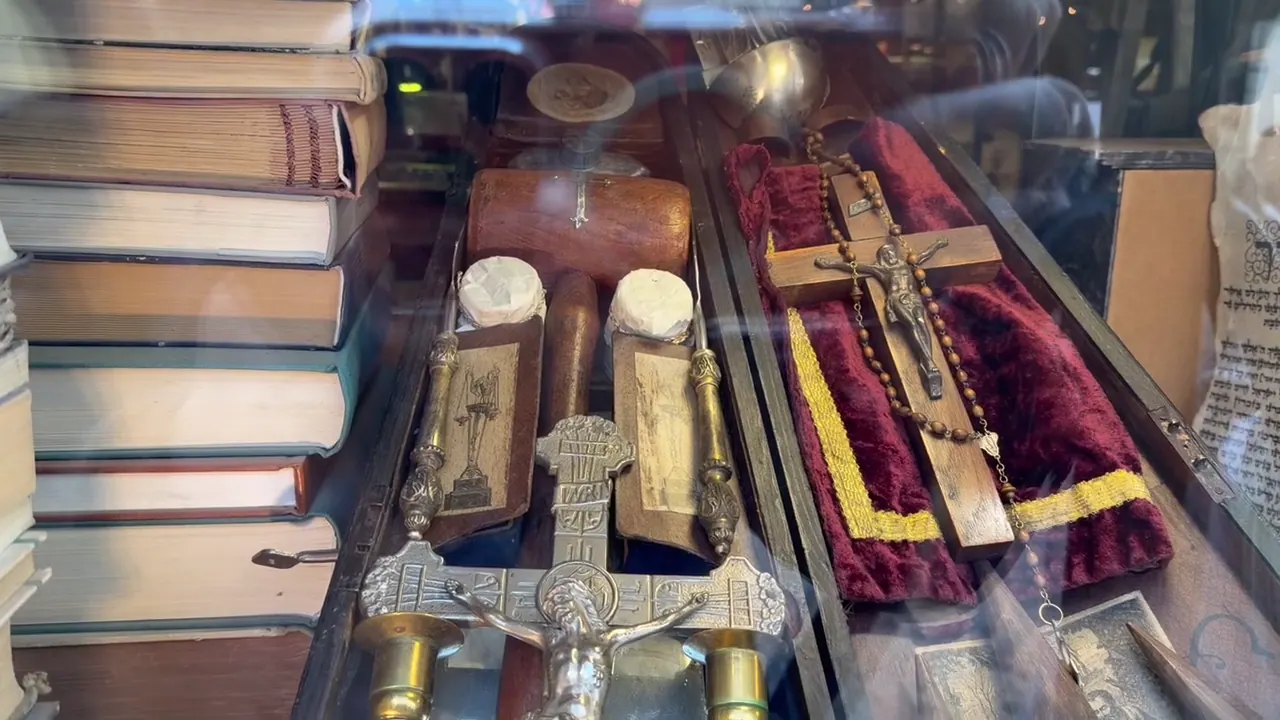
The antique and souvenir shops reward slow wandering. One antique-shop window in the area has displayed a vampire-hunting kit: an entertaining curiosity, but not automatically proof of an authentic historical vampire-hunting practice. Between amber dealers, gallery windows and elaborately carved signs, there is always something odd enough to stop you in your tracks.
New Town: six centuries of a separate identity
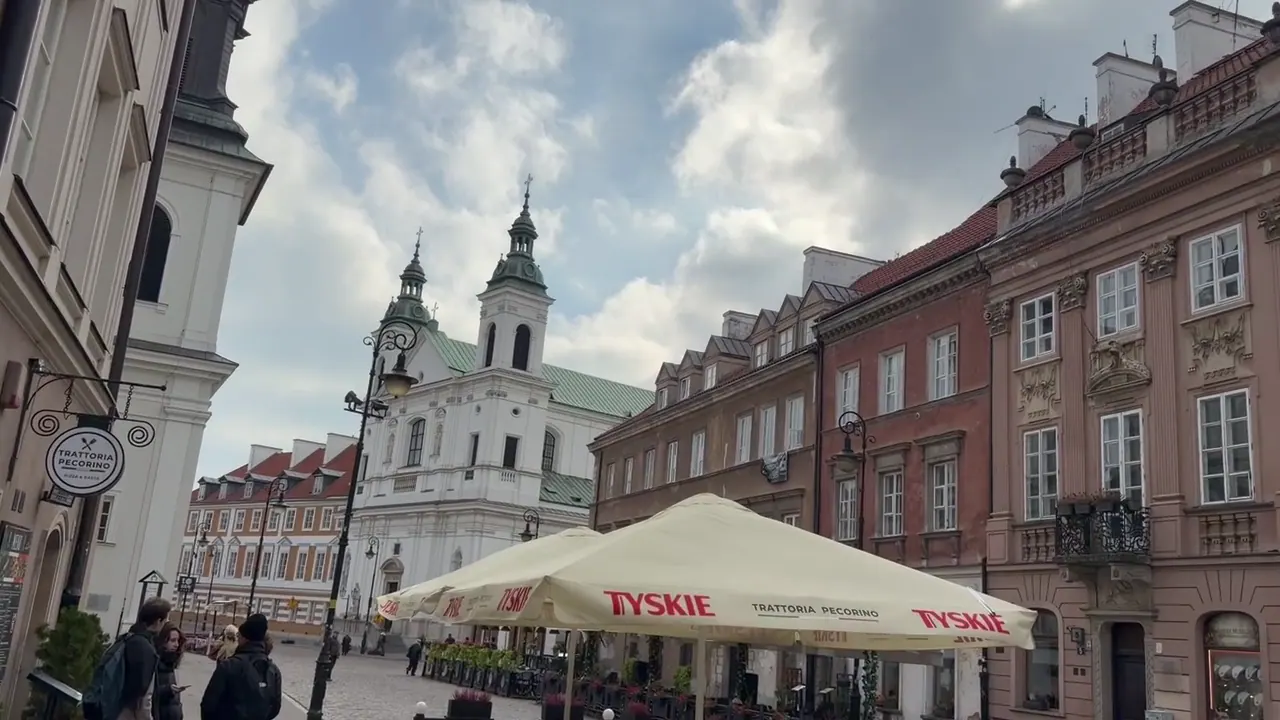
Continue through the Barbican towards Freta Street and the atmosphere changes. New Town received its civic rights in 1408 and once had its own municipal government. Its quieter streets and Market Square merit more than a quick glance on the way back to the centre.
At Freta 16 is the museum associated with Marie Skłodowska-Curie’s birthplace. Born in Warsaw in 1867, she later conducted pioneering radioactivity research and became the first person awarded Nobel Prizes in two scientific disciplines.
The Church of St Kazimierz was founded under the patronage of Queen Maria Kazimiera after Jan III Sobieski’s victory at Vienna in 1683. In August 1944 it sheltered civilians. German bombing on 31 August caused the collapse of the church, killing a very large number of people, often estimated at around a thousand. Maria Zachwatowicz directed its post-war reconstruction.
St Hyacinth’s Church on Freta Street housed a field hospital during the uprising. Bombing and later German violence killed people sheltering in and around the complex; surviving traces of destruction include damaged stonework. Our Sacred Warsaw coverage provides more background on these churches.
The square also witnessed a notorious act of public punishment. After Michał Piekarski attacked Sigismund III in November 1620, he was led through Warsaw and executed in a public spectacle. The Museum of Warsaw locates the principal execution at New Town Market Square, while some other accounts emphasise Piekiełko and the route through the city.
The sewer escape and neighbouring memories
By the end of August 1944, defenders of Old Town were trapped. During the night of 1–2 September, thousands escaped through Warsaw’s sewer network towards districts that remained in insurgent hands. Near Krasiński Square, by Miodowa and Długa, the historic entrance is commemorated; the darker cobbled line helps visitors locate it.
The surrounding area also carries Jewish wartime history. During the Warsaw Ghetto Uprising of 1943, a carousel near Krasiński Square became associated with Czesław Miłosz’s poem Campo di Fiori. The wider Jewish heritage of the district belongs in our Jewish Warsaw and Muranów guides, which tell those histories more fully.
A walk through two towns
Begin at Castle Square and the fallen Sigismund shafts, explore Market Square and the Museum of Warsaw, continue via Kanonia and Gnojna Góra to the Barbican, then walk up Freta Street to New Town Market Square. If you have energy for an extra chapter, continue to the Warsaw Uprising memorial and sewer entrance near Krasiński Square.
Allow two to three hours for an outdoor introduction, or half a day to a full day with museums and interiors. The historic streets are free to explore; ticketed attractions set their own schedules. The cobbles, slopes, steps and narrower lanes can present accessibility challenges.
The area is especially photogenic in early morning or evening. For public transport, Stare Miasto stops on the W-Z route are useful for Castle Square, while Ratusz Arsenał metro station offers an approach from the north-west.
Keep exploring: Sacred Warsaw · Warsaw museums · Jewish Warsaw · Vistula & Waterfront.
A city that rebuilt its memory
The Old Town is not simply a frozen medieval settlement or a modern imitation. It is a place where historic structure, recovered objects and post-war craftsmanship coexist — the story of centuries of Warsaw life and of the people who refused to let that history disappear.
← More Warsaw guides