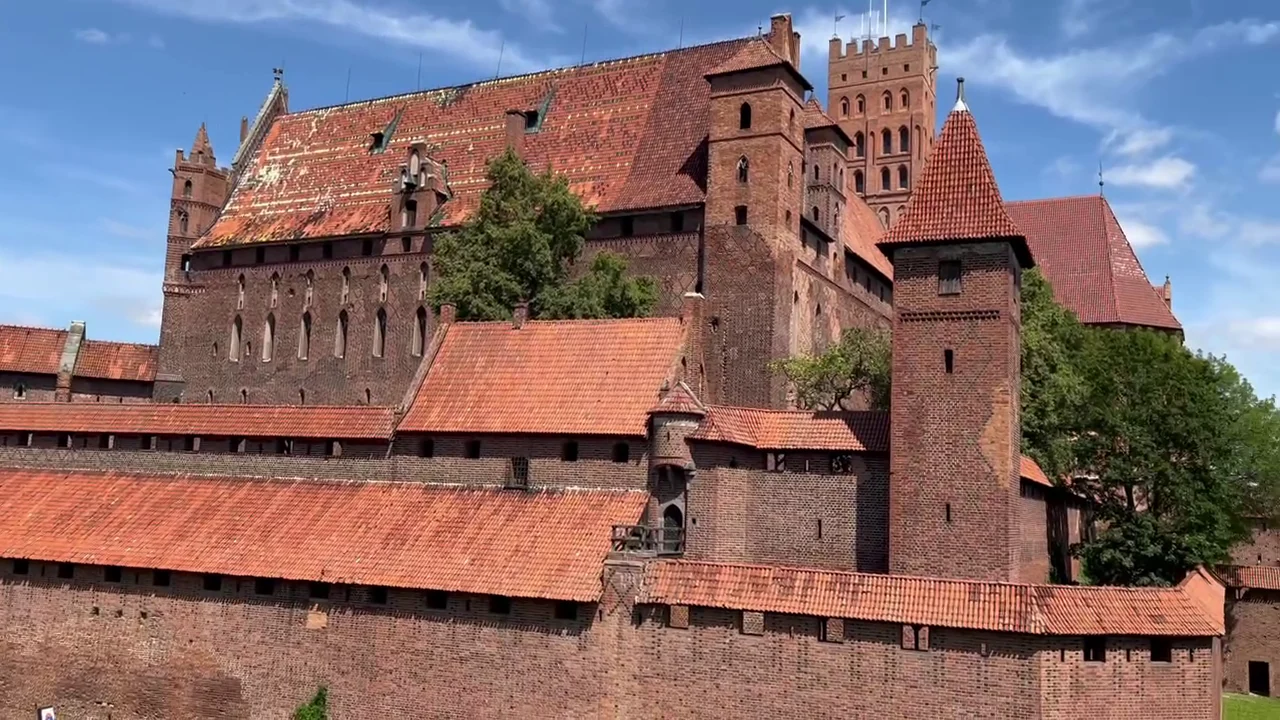
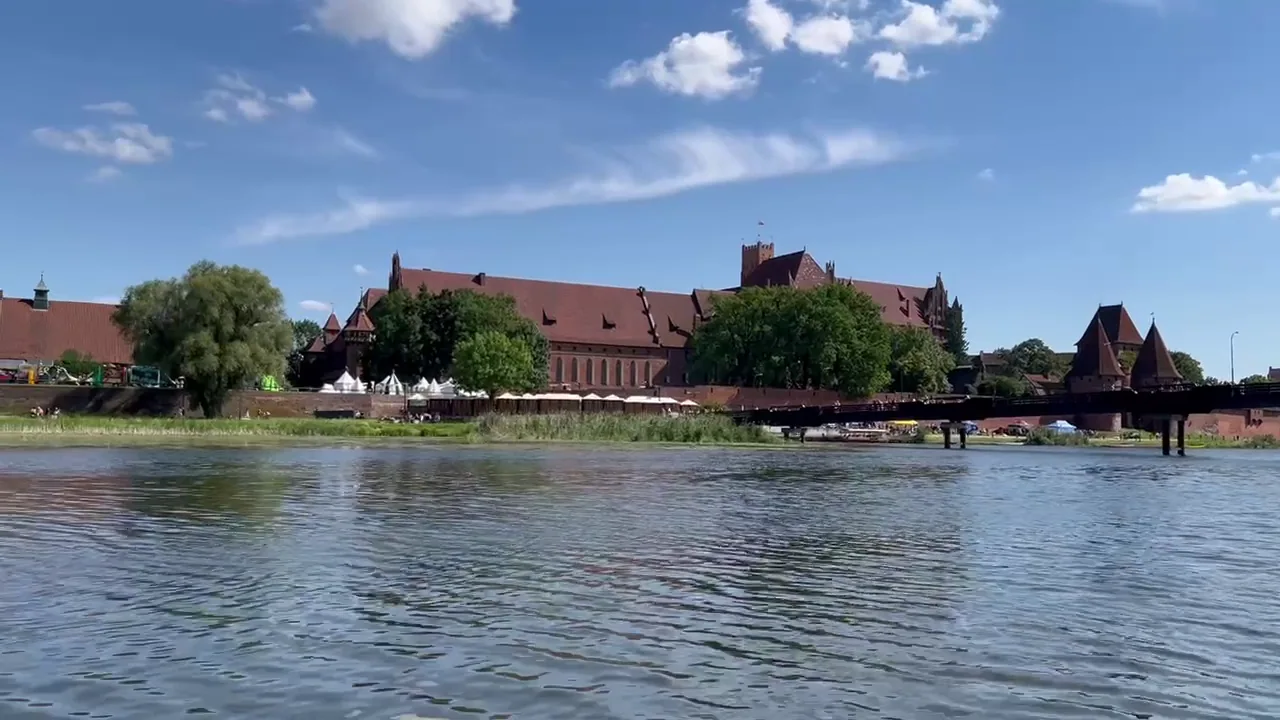
Outer Castle Zamek Niski / Przedzamcze
The working world of the fortress: service yards, defensive approaches, storerooms, workshops and the infrastructure that supported daily life.

Discover Poland / Pomerania / A Brit in Poland mini guide
A mighty Teutonic fortress, Gothic town streets, tiny knights and riverside views. Here's how to get more out of Malbork than a quick castle visit.
Why go?
Most people come for Malbork Castle (Zamek w Malborku), and rightly so. This UNESCO-listed brick Gothic complex was the headquarters of the Teutonic Order's Grand Masters. But step outside its walls and you'll find a historic town, surviving medieval details, a riverside walk and some charming modern surprises.
I've visited Malbork three times, including a guided tour with my parents and a very hot July 2024 trip. My advice? Give yourself time for both the castle and the town.
01 / The headline attraction
This isn't a castle you can rush through in forty minutes. Its three interconnected parts had different jobs — from running the fortress to housing the Order's leadership.
The working world of the fortress: service yards, defensive approaches, storerooms, workshops and the infrastructure that supported daily life.
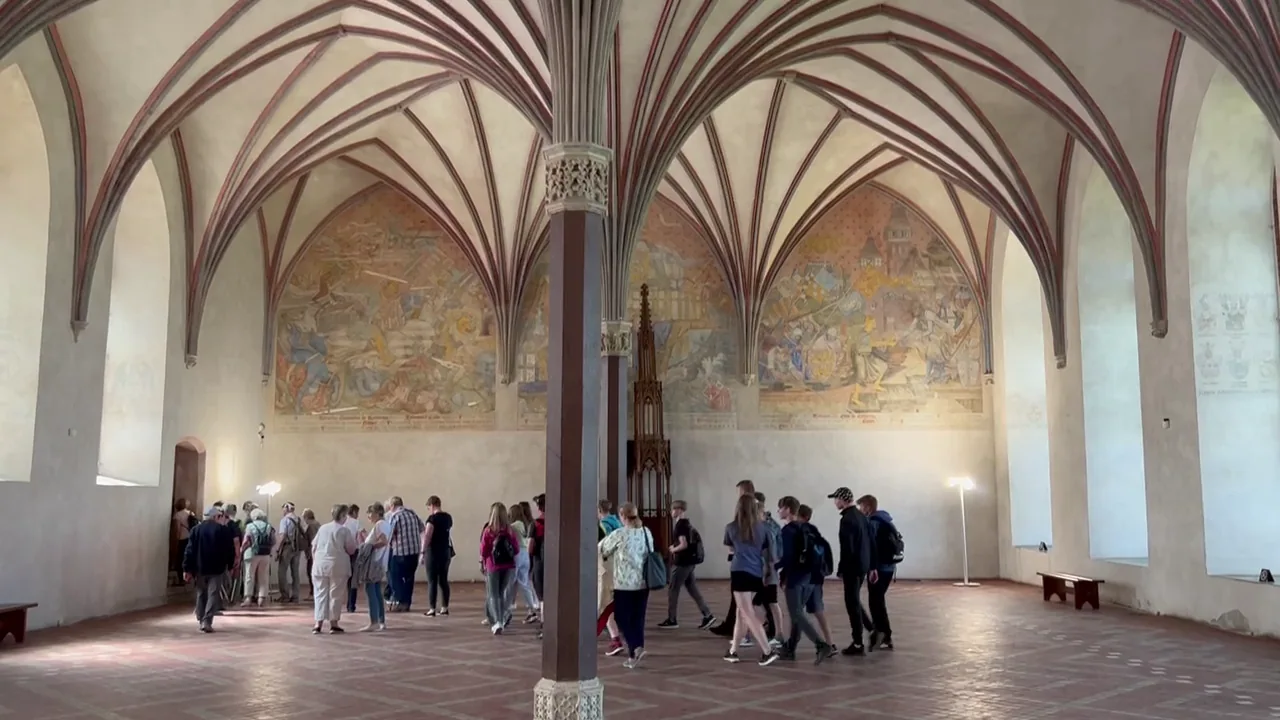
The prestigious rooms: the Grand Masters' Palace, Great Refectory, striking vaulted halls and spaces used for administration and hospitality.
The older monastic core, with its enclosed courtyard, cloisters, church and spaces linked to religious life and the Teutonic brethren.
The story behind the fortress
Malbork began taking shape around 1280 as a stronghold of the Teutonic Order, a Catholic military-religious order that established its own state along the southern Baltic. Its expansion came through crusading warfare, conquest and the forced Christianisation of Indigenous Baltic Prussian communities. Those origins are an important part of the story behind the magnificent brickwork.
Construction began around 1280. In 1309, Grand Master Siegfried von Feuchtwangen moved the Order's headquarters here from Venice. Over subsequent decades, the complex expanded from a fortified convent into an immense administrative, ceremonial and military centre. The High Castle housed the monastic brethren; the Middle Castle received visiting dignitaries and contained the Grand Masters' Palace; and the Outer Castle supported daily operations with workshops, stables, stores and armouries.
The Teutonic army suffered a decisive defeat to Polish-Lithuanian forces at the Battle of Grunwald. The victors then advanced on Malbork. Heinrich von Plauen organised its defence and the besiegers ultimately withdrew. He was elected Grand Master later in 1410. The Order retained the castle, but its military prestige and finances suffered; the costly settlement that followed added to growing tensions.
During the Thirteen Years' War, the Order relied on mercenary troops it struggled to pay. Soldiers holding Malbork as security for their wages negotiated a financial arrangement with the Polish side, and in 1457 the castle passed to the Polish Crown. It's one of Malbork's great historical ironies: the fortress that had withstood the 1410 siege changed hands because its defenders were owed money.
The castle became a royal residence used by Polish monarchs and an important administrative centre of Royal Prussia. This was a different chapter in the same buildings' history: spaces created to project Teutonic power now served the Polish Crown.
Following the First Partition of Poland in 1772, Malbork came under Prussian control. Parts of the complex were altered for military use before major 19th- and early-20th-century restoration campaigns, notably associated with Conrad Steinbrecht. Fighting in 1945 devastated substantial portions of the fortress.
Postwar reconstruction drew on earlier surveys and conservation records. The castle became a museum and was inscribed on the UNESCO World Heritage List in 1997. Much of what visitors see today combines surviving medieval fabric with later restoration and painstaking reconstruction — all part of the castle's remarkable history.
Read more: Malbork Castle Museum's history ↗ · UNESCO World Heritage listing ↗
02 / Beyond the walls
Don't let the castle become your entire itinerary. These are the stops that help the rest of Malbork tell its own story.
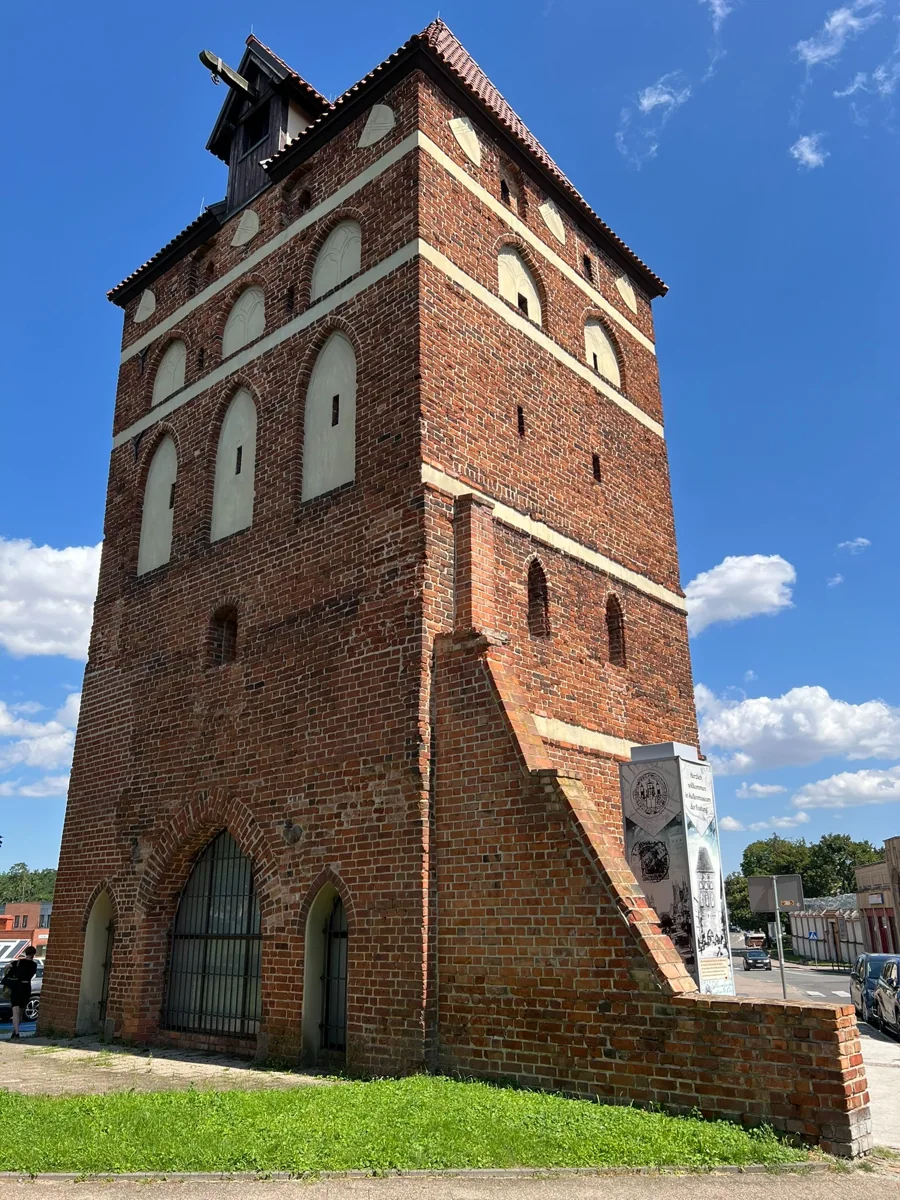
A lovely Gothic brick survivor that reminds you medieval Malbork had merchants, residents and civic life alongside the Order.
Another side of the town's medieval story, with Gothic architecture shaped by reconstruction following the wars of the fifteenth century.
Look for surviving pieces of the town's old defensive system. Malbork was more than one giant fortress.
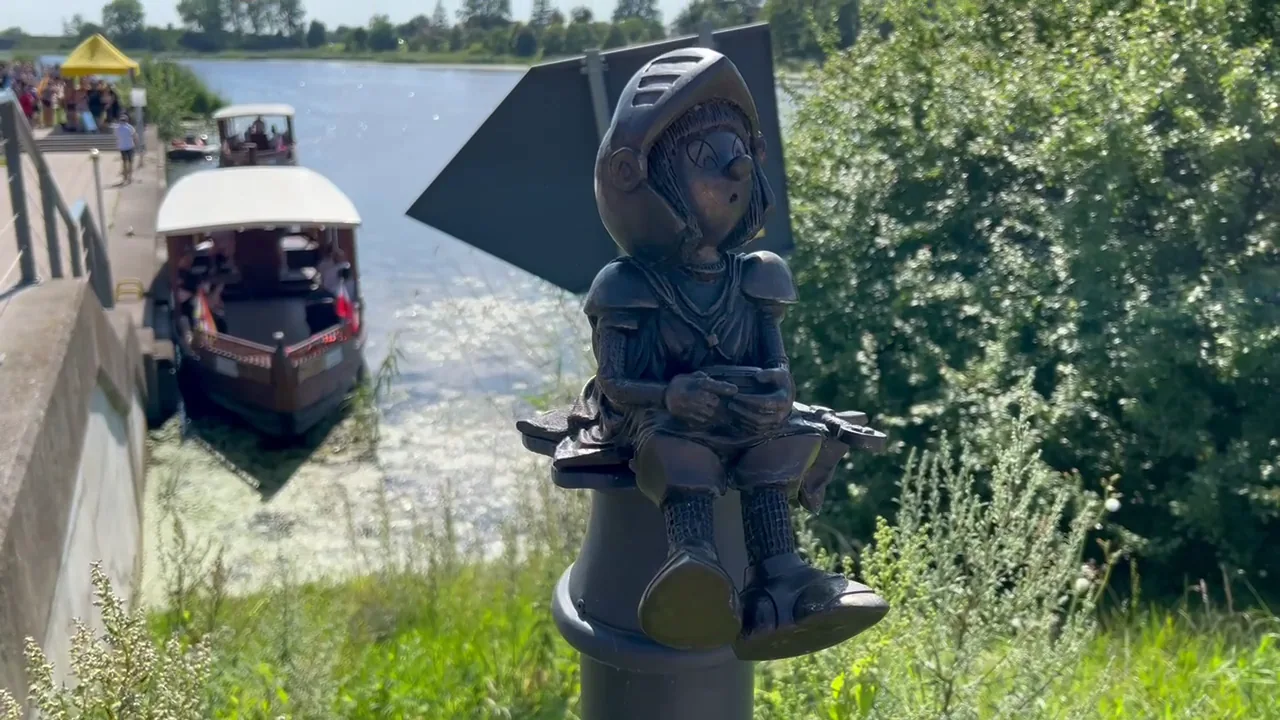
Small bronze figures inspired by Malbork's knight mascot began appearing in 2020. Finding a few becomes a fun side quest while exploring the streets.
Step back across or along the water for some of the most rewarding views of the castle as a whole. It's also an excellent place to slow down after the long castle route.
03 / From my travels
On my second visit I took a guided tour with my parents — excellent for the historical details you could otherwise miss. Much of my filming comes from July 2024, when the heat had us hunting for shade between stops.
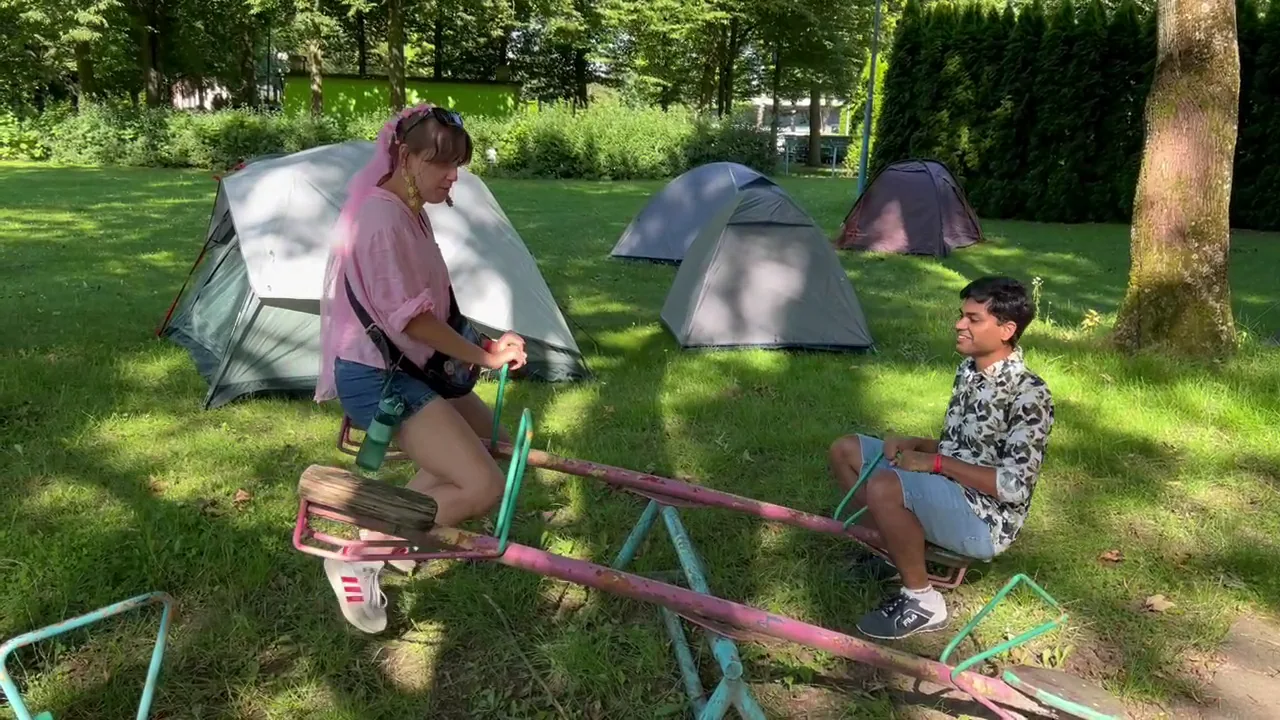
We stayed at Camping nr 197 Nogat in a small enclosed field. It was a convenient base, but our pitch did not have a castle view; we went out to the river for the big panoramas.
Near the castle we found souvenir stands, food options and mead for sale. Treat those as memories of my visit rather than a guarantee that the same stalls operate every day.
The courtyards and walking routes can be exposed. Bring water, comfortable shoes and leave time for the shade. Medieval walls are formidable; July sunshine is surprisingly competitive.
04 / Make it happen
Malbork has rail connections with Gdańsk, Warsaw and other Polish cities. The castle is walkable from the station. Confirm your specific train and current timetable before travelling.
Choose the route that matches your interests and allow several hours for a full visit. Check seasonal opening hours, ticket rules and available guided or audio-guide options.
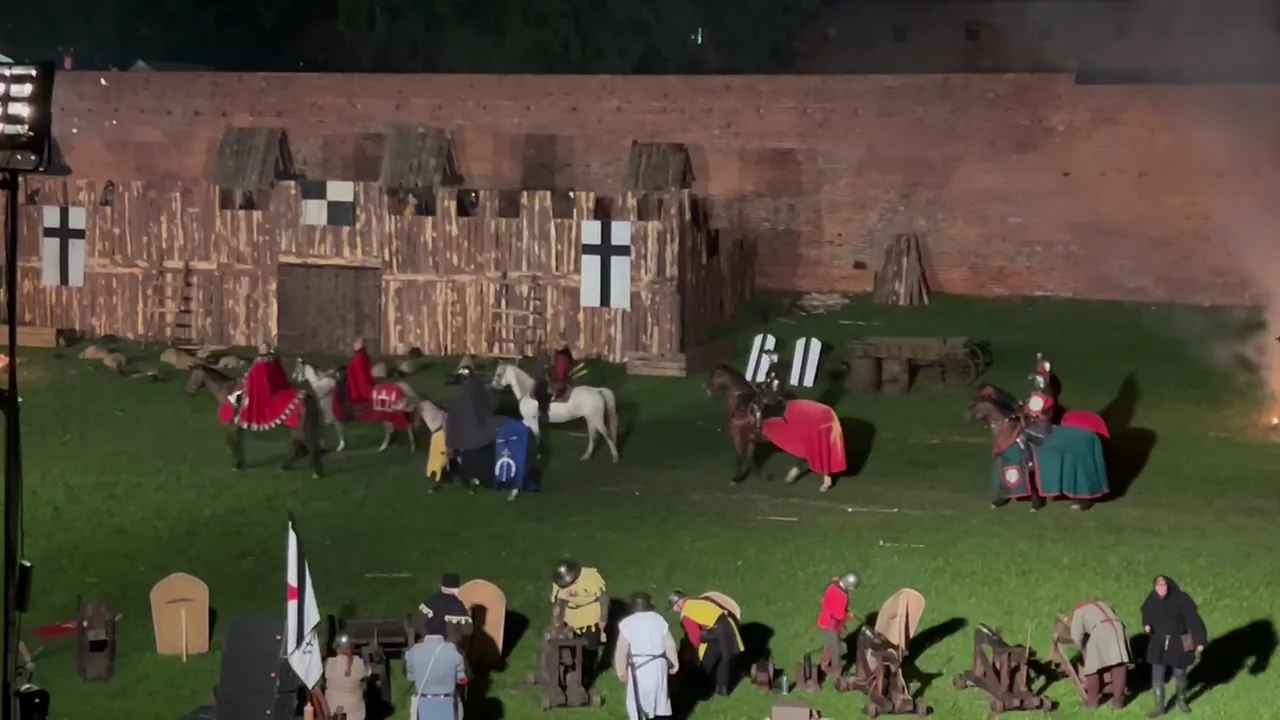
Official castle tickets ↗I attended the ticketed evening Siege of Malbork reenactment in July 2024. If you want to see a future performance, check that year's programme and book ahead — don't assume admission on the night.
Castle Museum and event news ↗Leave room in your itinerary for a meal, souvenirs, a riverside stroll and perhaps a taste of mead. For an easier visit, avoid squeezing the full castle and the rest of the town into a very short stop.
Visitor prices, opening times, temporary closures and reenactment schedules can change. Always check official sources before setting off.
05 / Come exploring with me
See the interiors, town streets, my July 2024 siege reenactment footage and the little knight statues in the companion Brit in Poland video.
The World's Largest Brick Castle & Beyond!
▶ Watch the full video ↗← Malbork on the Pomerania map